Building a digital sustainability roadmap for the communication team of Rennes Metropole
Mission
In the context of the REEN Law, the Communications and Information Department of Rennes Métropole joined forces with Les Champs Libres cultural centre to draw up a Responsible Digital Roadmap.
This initiative stems from a genuine desire on the part of the working group members to restore meaning and coherence to communication practices of the Metropolis regarding public services. A Life Cycle Assessment (LCA) of the environmental impacts of digital communication services (video, social networks, etc) was asked to steer the strategy, but we did more than that.
Our two-step proposal
Our proposal is structured around two steps:
- co-creating a shared vision and roadmap seemed to us to be the first step (defining the scope of the project was, in any case, a prerequisite for the requested quantitative assessment) ;
- a Life Cycle Assessment of digital communication services supported by recommendations.
Step 1: Co-creating a Responsible Digital Strategy
The first phase was carried out through several workshops.
The first workshop laid the groundwork for the working group: getting to know each other, identifying the roles and complementary skills of the working group members, and aligning on the scope and objectives that unite them. We discussed the necessary resources, success indicators, and collectively prioritized the following objectives:
- Environmental assessment: obtaining a quantified before/after analysis of the communication tools.
- General empowerment: raising awareness to foster a collective dynamic.
- Practical empowerment: producing and disseminating a best practices guide, integrating eco-design clauses into specifications.
- Communication narrative: making public action and choices transparent to citizens, users, and the public, highlighting the positive externalities of sustainable projects.
- Systemic approach: combining this with other indicators (audience + budget + social benefit).
- Creating commons: organization and governance methodology, intra- and extra-territorial sharing.
The remaining workshops focused on identifying stakeholders, iterating on necessary actions, prioritizing them, and orchestrating the key milestones of the roadmap on a timeline. We sometimes involved other people in the sessions to pool awareness-raising efforts and ensure actions aligned with stakeholders’ concerns.
At each workshop, the goal was to create the conditions and facilitate a process that would allow them to bring together not only their knowledge of the field, their topics, their constraints, and the stakeholders in their ecosystem, but also their motivations for engaging in meaningful cooperation that would enable them.
Step 2: Conducting an Attributional Life Cycle Assessment
The objective of the Attributional Life Cycle Assessment (ALCA-a) was to identify areas of environmental impact, set corresponding reduction targets, and contribute to decision-making.
The two resulting assessment objectives are:
- to assess the environmental impact of the production, administration, and use of digital services associated with communication activities within Rennes Métropole over one year;
- to assess the environmental impact of the production, administration, and use of a communication campaign.
To achieve this, we collected primary data for the years 2022/2023, taking into account:
- the digital equipment and services used by internal teams, service providers, and citizens ;
- the various traditional digital “tiers”: data centers, networks, and terminals;
- all phases of digital communication projects, including design and operations.
Based on the teams’ usage/practices and the (un)availability of readily available data, Hubblo developed four models to evaluate SaaS digital services: Streaming, Social Network, Storage, and Website.
Results and lessons learned
Working Group Actions
The group showed:
- a genuine and shared motivation to be agents of meaningful positive change ;
- complementary profiles, knowledge, and skills ;
- a dynamic of cooperation at work between two theoretically separate entities (the Rennes Department of Communication and Information and the Champs Libres cultural center), with active participation and listening from each individual ;
- a constant curiosity, always seeking to develop skills to create shared understandings of the impacts of digital technology ;
- a team spirit that extends beyond the working group, involves other stakeholders, and is committed to widely disseminating shared knowledge ;
- and shared laughter during work!
These are precisely the ingredients we value in a collaborative effort.
Feel free to visit their dedicated collaboration space for more sustainable digital communication: ComNum Rennes. It consolidates documentation, their learning, and their reflections, which extend beyond the strict scope of our intervention.
The roadmap has clarified a common foundation of intentions and objectives, including stakeholder dependencies, to propose forward-looking phases while allowing for flexibility in the milestones to accommodate day-to-day constraints.
Feel free to consult the page dedicated to their roadmap.
One of the achievements is the launch of the new website, which serves, in a way, as a “manifesto” of their commitments to eco-design and inclusion.
Life cycle assessment results
Assessing digital services associated with communication activities
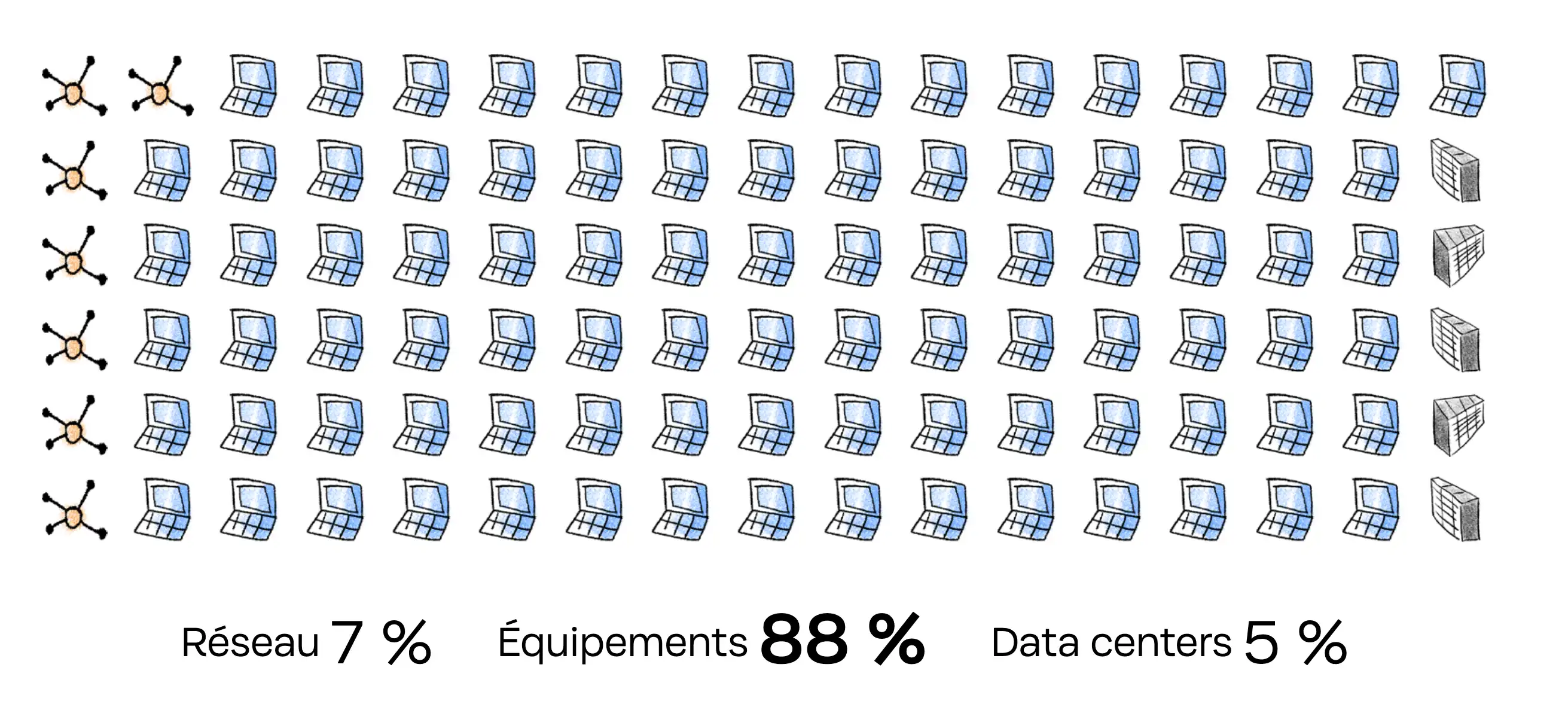
The study highlighted the overall environmental impact of digital activities within the Rennes Métropole communications department, considering all environmental criteria and the complete lifecycle of equipment and services. The study revealed the predominance of SaaS services (networks and devices) in these impacts, particularly due to the massive viewing of high-definition videos by internet users.
Several reduction strategies were proposed and their benefits evaluated:
- reducing video usage,
- limiting the duration of video views,
- reducing image quality, and
- converting part of the catalog from video to podcast format.
Analyses “excluding video” were also conducted, highlighting the impacts related to devices.
In this context as well, several reduction strategies were proposed and their benefits evaluated:
- questioning/challenging usage patterns,
- promoting the use of low-impact devices,
- promoting longer device lifespans, and
- avoiding multiple devices.
Assessing the environmental impact of a digital communication campaign (“This Summer in Rennes”, 2023)
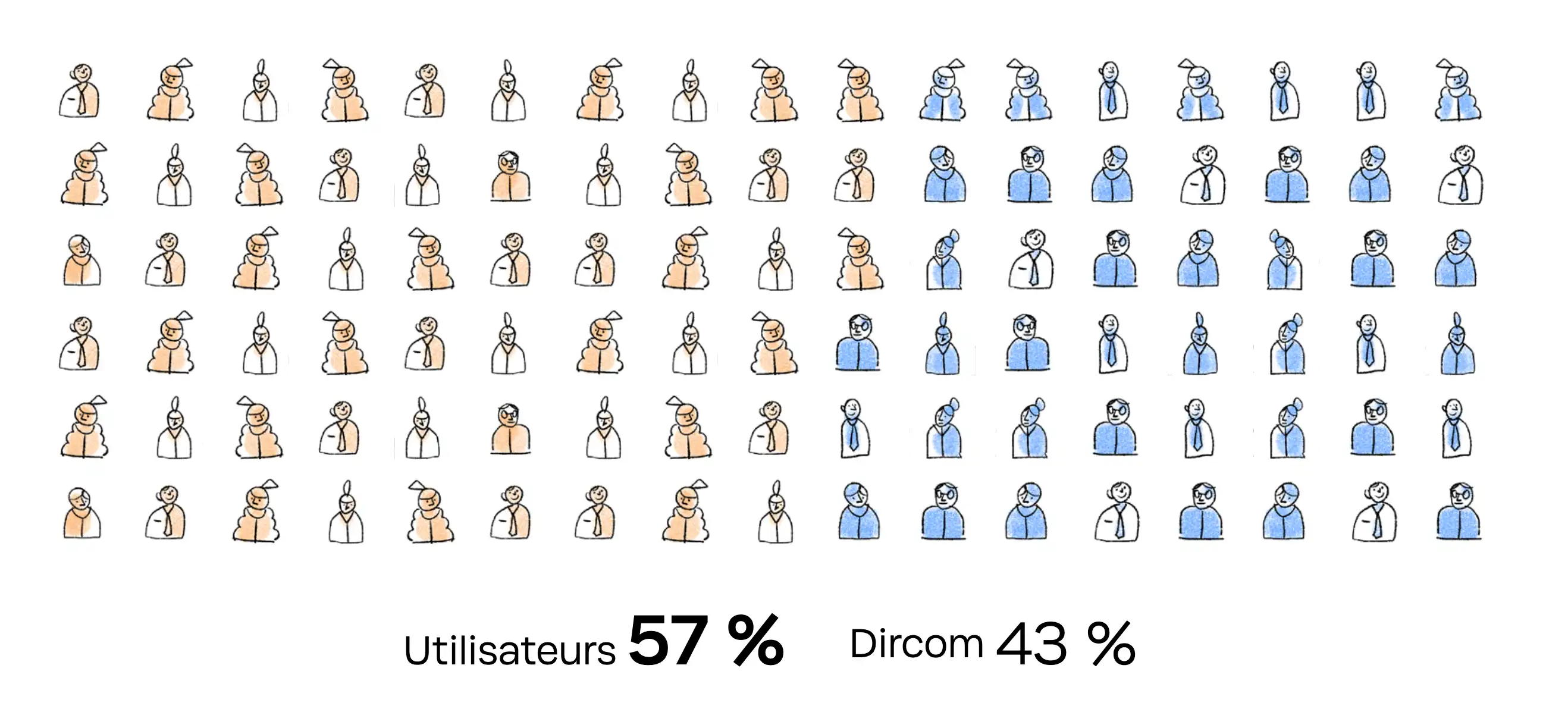
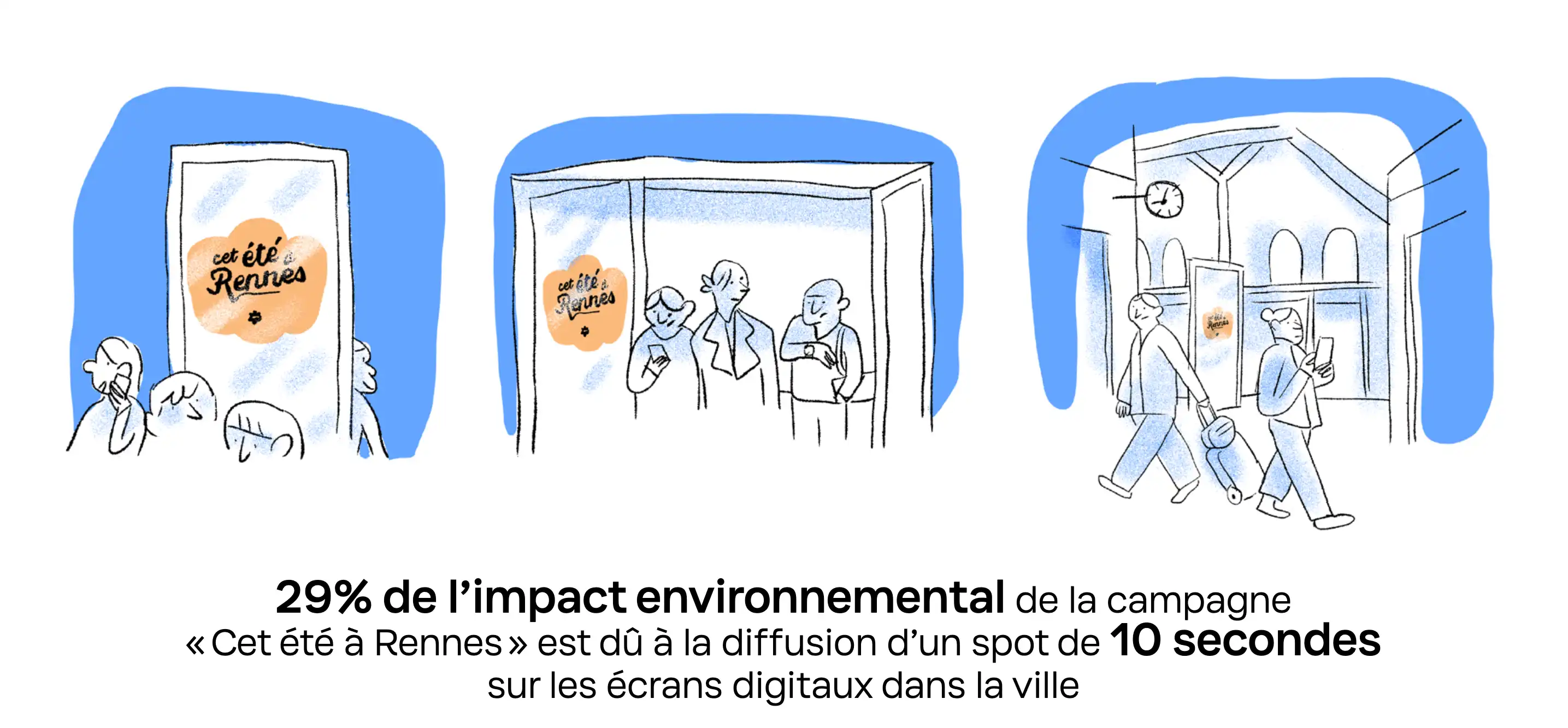
The study highlighted the overall environmental impact of the campaign across all environmental criteria and the complete lifecycle of equipment and services. The primary impact was that of the equipment/terminals used to access services managed in-house.
Further analyses revealed the impacts of digital signage deployed in public spaces, as well as social media. The “terminal” reduction levers identified at the overall level remain relevant for a campaign.
After undertaking a Life Cycle Assessment (LCA) of digital services and communication campaigns, their perspective has profoundly evolved. It enables the Communucation departement to refine their roadmap and to set priorities.
Testimony
“Beyond the service itself, this collaboration allowed us to raise our awareness and develop our skills in the LCA methodology. A first step taken towards more sustainable communication, in line with our values of public service and the common good. Today, we continue our progress, with the objective of making these results accessible and usable by the teams, within a commons approach."
Estelle Soleillant, Mathieu Delsaut and Guillaume Rouan.